
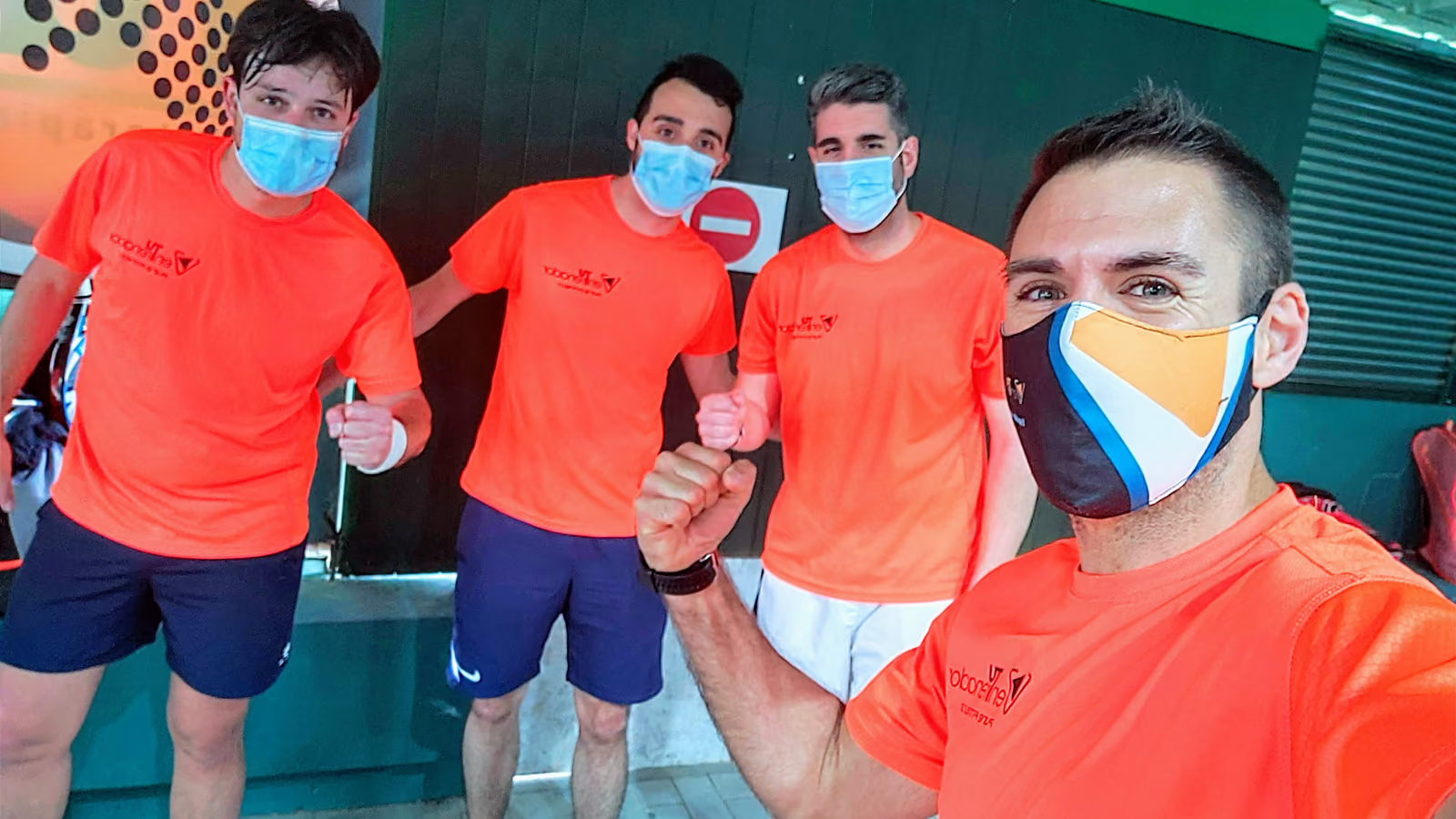
This week a student asked me a question I have been thinking about for days: "Manu, why is padel so addictive?" She lives in London, started playing recently and wanted to understand what is happening to her. And honestly, I enjoyed that conversation enormously.
I have known her for years, from the time we worked together on physical preparation and personal training. Now I see her starting padel, with that mix of clumsiness and enthusiasm of a beginner, and it feels like going back in time. It is like watching myself twenty years ago, when everything was new and every match was a discovery. So I told her what I lived through, the same way I do with anyone starting from scratch.
The short answer is that padel hooks you for three reasons: because you notice you are improving, because it gives you epic moments and because it gives you a tribe. Then there are extras, like the beer afterwards, which always add up. But the skeleton is that. Let's go part by part.
First reason: seeing that you improve
When I asked my student what had her hooked, she did not hesitate: seeing that she improves almost every day. Every time she plays again she notices she has got better at something. A shot that used to escape her, a ball she now reaches, a wall that no longer scares her.
That is gold for the brain. Padel has a very generous learning curve at the beginning: in a few weeks you go from not hitting two shots in a row to playing real points. And that constant sense of progress is one of the most powerful engines there is to keep playing.
On top of that, the court feeds information back to you all the time. The wall teaches you, your partner corrects you, the opponent forces you to position yourself. You do not need a master's degree to notice you are improving: the game itself tells you.
Second reason: the epic feeling of keeping the point alive
My answer, on the other hand, was different. What hooked me, and what still happens to me twenty years later, is the feeling of being able to contradict the expectation that the point is over.
The ball has gone past you. It looks done, like there is nothing to do. And then you play a contrapared, the back-wall boast, and put it back in play. Or they hit a smash that seemed impossible and suddenly you run and touch it with the tip of your racket. The point is still alive. That situation has something epic about it: it looks like you are fighting the impossible and yet you manage to keep going.
It is not just a pretty shot. It is the feeling that in padel nothing is ever settled, that there is always a second chance if you take one more step. And once you feel that, it stays with you.
That point that was already lost
The boast is the perfect example of that epic feeling, because it does not require strength or being a prodigy: it requires intention and daring. That is why I love teaching it, even though it is not the first thing I work on with a beginner. In my article about why I never teach the boast at the beginning I explain when it makes sense to introduce it and why.
Third reason: padel is played four at a time
There is a structural factor that changes everything: padel is played in doubles. Almost always. And that means you share the court, the decisions and the celebration with a partner. A companion in arms, with whom you get angry, laugh and hug in the same match.
If you compare it with tennis or frontenis, the difference is clear: there the courts are bigger and there are fewer players per square metre. In padel, four people share a relatively small space. It is a much denser sport socially. And that density makes it incredibly easy to meet people.
There is one of the keys to the addiction: you are not just playing against someone, you are playing with someone. And that turns every match into a small social plan.
Phase 1: the club was a small family (2005-2017)
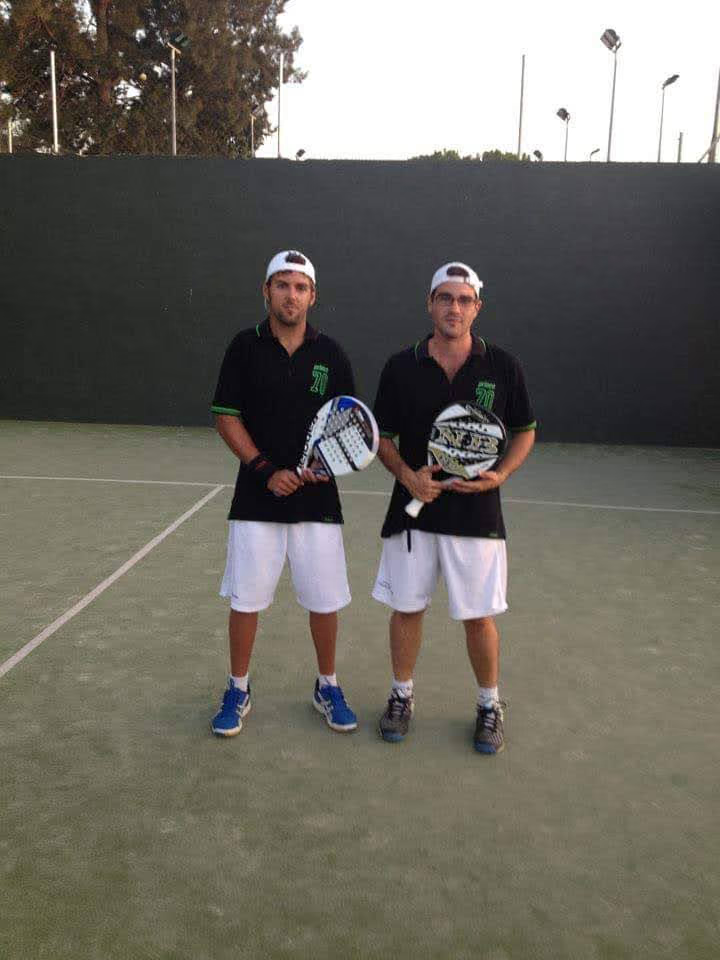
When I started, in 2005, padel worked differently. You joined a club and lived through that club the whole society of people who played around it: the club league, the local leagues, the club tournaments, the area tournaments, the sports week, the summer tournaments. Everything happened there.
It was like living in a small bubble. And I do not mean that in a bad way: it was great. You were surrounded by people who enjoyed your sport, deeply integrated in the club, and you knew that if you went there you would see your friends. Some days you went to play and some days you just went for a drink while watching matches. You stayed to watch this one or that one and the afternoon was gone.
That has been lost a little. That first phase, which for me lasted until 2014 or 2017, had something of a village inside the city: a small family around a court. I am not saying it was better, but it was different, and I have very good memories of it.
Phase 2: open matches changed everything
Then came the second phase, the one that started shortly before the pandemic and exploded with it. The biggest example, for me, has been Playtomic, although there have been more platforms. In Valencia we have Matchpoint, which also integrated Matchi, and in the UK my students use Padel Mates.
What do these platforms do? Very simple: they find players at your level who want to play at the same place as you, at the same time as you. You open a match and people start arriving. You no longer need friends in your circle who play at your level: you can go anywhere and play with people who are on your wavelength.
It is, with the obvious differences, like arriving at the park when you were a kid and saying: "I want to play, who is in?". And other kids with the same idea turn up. The difference is that here they arrive with the right level and a booked court. The number of people you cross paths with becomes almost infinite.
Phase 3: team leagues, version 2.0
From there also came the national series, the interclub leagues and everything that followed. I did not live it from the inside back then; I lived it with the people I was training physically, who were competing, but not as a player. Now I am living it again first-hand.
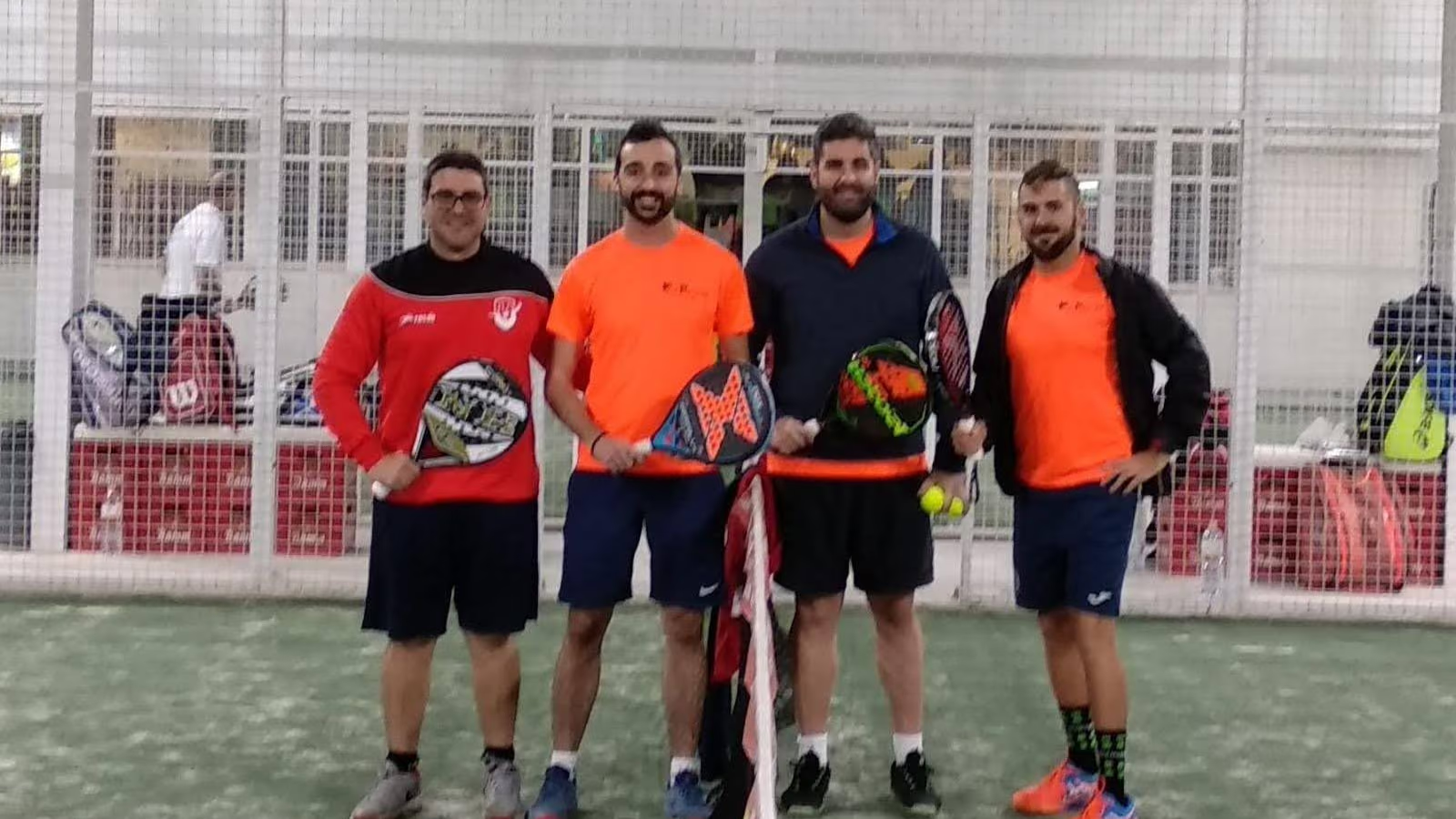
And it is, as I say, the 2.0 version of team leagues. Before, you played against your club mates. The first year was fine, but after a while you knew everyone, you knew how they played and you ended up fighting for the same thing. Now, suddenly, a door opens to a whole new ecosystem: you play against people from other clubs and you bond again with your own.
I am now in a team at Padel Sedaví and honestly it is great. We are people of a similar age, a similar level, some play more than I do, but overall the level is very good. And above all, the people are lovely. It is a healthy atmosphere of people who want to improve, who want to have a good time and who behave well. I am enjoying it a lot.
That is another great thing about padel: it is capable of bringing together people with similar interests. And when that happens, the sport stops being just a sport.
The beer: the social pillar of Tuesdays
And yes, there is the beer afterwards. That always adds up. But there is something deeper than the beer: the fixed plan.
For example, I see my best friends almost every Tuesday. We play the match and then we go for dinner. It is my social moment of the week, even more than the weekend, because at the weekend sometimes you meet one person, sometimes another, sometimes you go with your partner, sometimes with the family and sometimes you do nothing. Tuesday, on the other hand, is always there.
It is a pillar. Even if it is a relatively short time, it is the time that always exists. And that, over the years, is worth more than many things.
Summary: improvement, epic and tribe
If you ask me what makes padel addictive, I keep three things: the perception of improvement, the epic feeling of keeping alive a point that seemed lost and the people. The community. The tribe.
Padel hooks you because it makes you better, it gives you stories to tell and it sits you at a table with people who enjoy the same thing as you. The rest, beer included, is the icing on the cake.
If you are just starting and want that improvement to come with a plan, my padel lessons in Valencia work on technique, tactics and, above all, the desire to keep playing. And if you have just landed in this sport, start with the padel beginners guide.