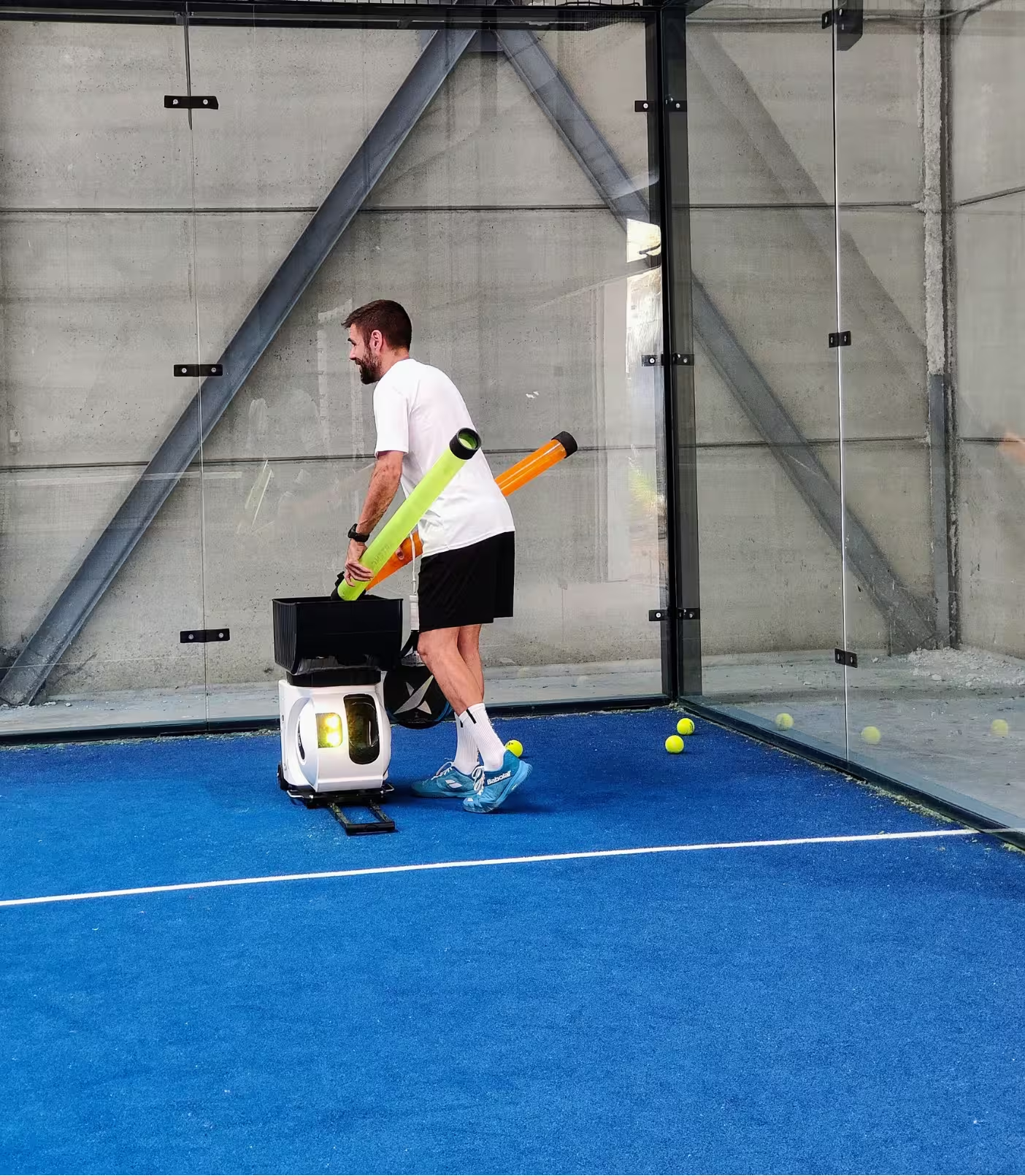
Hi, I'm Manu. Padel has something magical that sets it apart from tennis: the walls. The walls are not the limits of the court; they are your best allies. Learning to play with them is one of the most fun processes in this sport.
However, to play well with the walls, you have to use your head. And this is where I see the biggest disaster on club courts, both in beginner players and supposedly more advanced profiles (those who have been playing for years but feel they aren't improving).
Today I'm going to tell you why, in my padel classes in Valencia, it is "forbidden" to teach the boast (or contrapared) in the initial stages.
The problem with overusing the boast: The laziness trap
We tend to overuse the boast. We see it in professional tournaments and it seems like a spectacular resource. But in amateur padel, the reality is very different.
"Overusing the boast is a way of wanting to be more innovative sometimes, of wanting to run less, of wanting to position yourself worse and be a bit lazier. And that is the main problem." — Manu Carrilero
When you trust that the boast is going to save you, you stop doing the most important thing in padel: moving your legs, getting to the ball earlier, bending your knees, and turning sideways. You replace the physical effort and technical work of a good wall exit with an emergency resource that, when poorly executed, is a gift for your opponents.
"If you learn to use it every time you have the chance, in the end, you are going to sell yourself out, you are going to miss a lot of balls, and it's not the best idea." — Manu Carrilero
My wife's case: From zero to competing without hitting a single boast
I'm not just talking for the sake of it. I'll give you my wife's example. She has been playing padel for two years, I've been teaching her in classes and playing matches with her. Sometimes she jokingly complains that I still haven't taught her how to hit the boast.
But the results speak for themselves: in just two years she has gone from never having touched a racket in her life to playing level 3.5 matches. Something tells me we're doing things right.
And she's not the only case; it's what happens with all my students who start from scratch without acquired bad habits. By not having the "escape route" of the boast, their brain and body are forced to:
- Learn to position themselves well on the court.
- Not become lazy when moving towards the wall.
- Learn to turn sideways correctly.
- Get to the ball earlier to take advantage of a textbook wall exit.
What about the side boasts?
The side wall boast is almost a happy accident. You learn it, quote-unquote, by bouncing the ball around and joking on the court. It's not a tactical resource upon which you should build your defense when you are learning.
In my classes, I apply one of the principles of the MM Academy methodology: technique must serve tactics. That's why I prefer my students to build a solid foundation, to understand how to anticipate the ball.
When you master all that, I will teach you how to hit a boast to draw applause. Until then: bend your knees, turn sideways, and leave laziness on the bench.