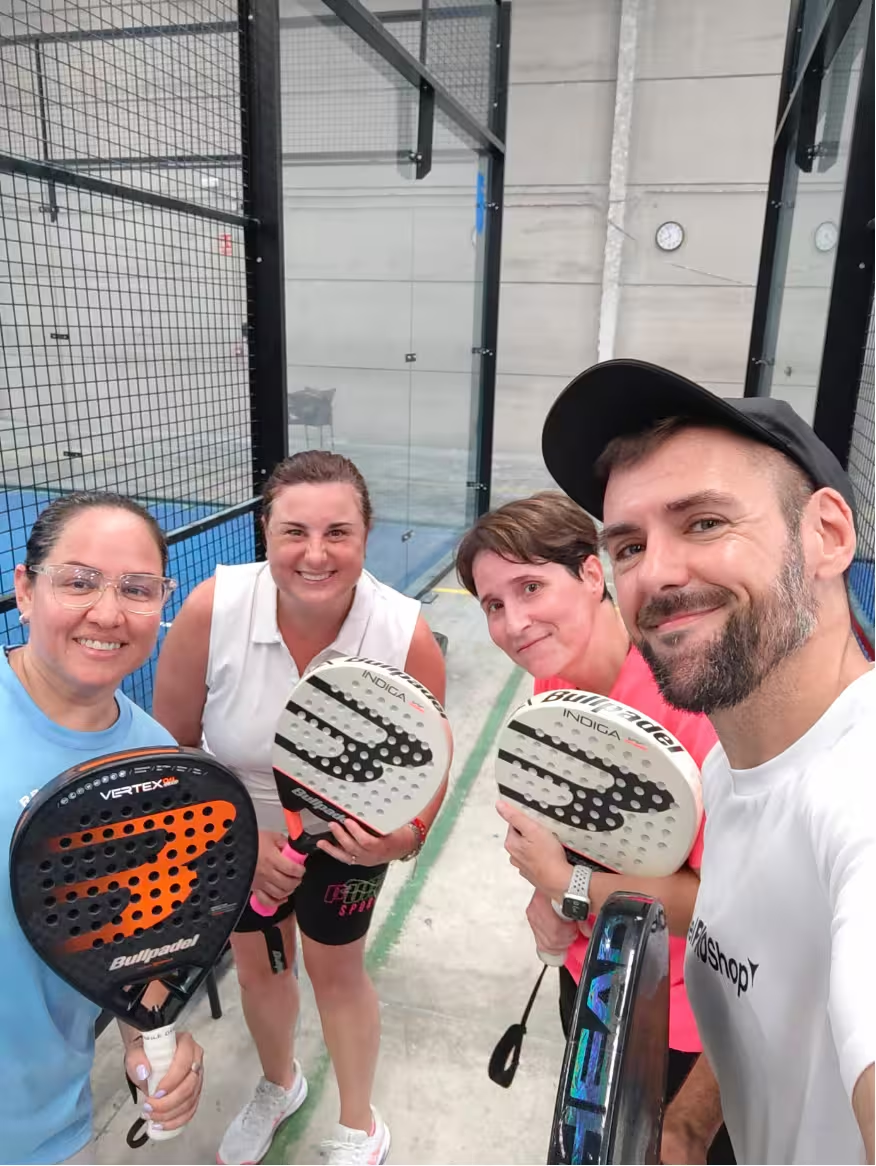
Hi, I'm Manu. If you've been playing padel with your friends for a while, competing in some local tournaments, and you feel like you're stuck, you're probably considering taking classes. It's the logical next step. But when you start looking for padel lessons in Valencia, you find a lot of options and formats: small groups, classes with your tournament partner, individual sessions...
Which one is best for you? As a Sports Science graduate and padel coach, I see frustrated players on the court every day because they aren't progressing. Today I want to break down the pros and cons of each format so you know exactly where to invest your time and energy.
The star format: Groups of 3 to 5 people
If you ask me which is the most interesting and dynamic option, I am clear: groups of 3 to 5 people.
On a learning level, it's a brutal format. Being a group makes it very easy to replicate real game situations, create a healthy competitive environment, and generate actions where you collaborate with teammates of your same level. Plus, it has an invaluable social extra: you meet other people with whom you can later arrange matches.
Now, I know what you're thinking. When I explain this format to people looking for classes, there's always someone who tells me: "But Manu, padel is played with 4. What do we do with 5 on the court?".
"I don't come to make you play; I come to make you learn. On the court, with 5 of us, I can make you hit many more times than in a real match, generating many more learning situations for you." — Manu Carrilero
Why does being 5 on the court accelerate your learning?
In a normal match, you hit one out of every four balls (if you're lucky and they aren't freezing you out). In my classes, the goal is not to play a match; it's to automate gestures and make good decisions.
"Five people always mean more chances to learn because there are more chances for mistakes to appear in one person that will serve to help the other learn." — Manu Carrilero
Seeing how a teammate makes a mistake and hearing the technical correction makes you integrate the knowledge from the outside before applying it yourself.
Pair classes: Fine-tuning the machinery
The option of training as a pair is great, especially if you have a clear goal. It's the ideal format if you come with your regular tournament partner to work on specific tactical situations and improve your coordination.
But it's not just for competing. It's also a fantastic option to share a hobby with your romantic partner or a family member (your father, your brother...). Sharing a common hobby while improving your physique and technique is an investment in health and relationships.
Individual lessons: The training scalpel
Finally, we have the 1-on-1 format. Here I focus 100% on the specific needs of your game. There are no distractions.
When do I recommend it? Mainly in two scenarios:
- Prevention and on-court rehabilitation: If you are coming back from an injury (shoulder, elbow, knee, or dreaded back pain), the individual format is non-negotiable at the beginning. We need to firsthand correct the biomechanically incorrect technical gestures that are hurting you and adapt the intensity of the session. It's not about putting a patch on you so you can play on the weekend; it's about building solid technique that protects your joints.
- Millimeter technical corrections: If you are stuck at a 4.0 level and need to improve very, very specific things (like weight transfer on the smash or the bandeja), an individual lesson allows us to isolate the movement until it is perfected.